The Best Locations for Building a Lake House: What to Look For
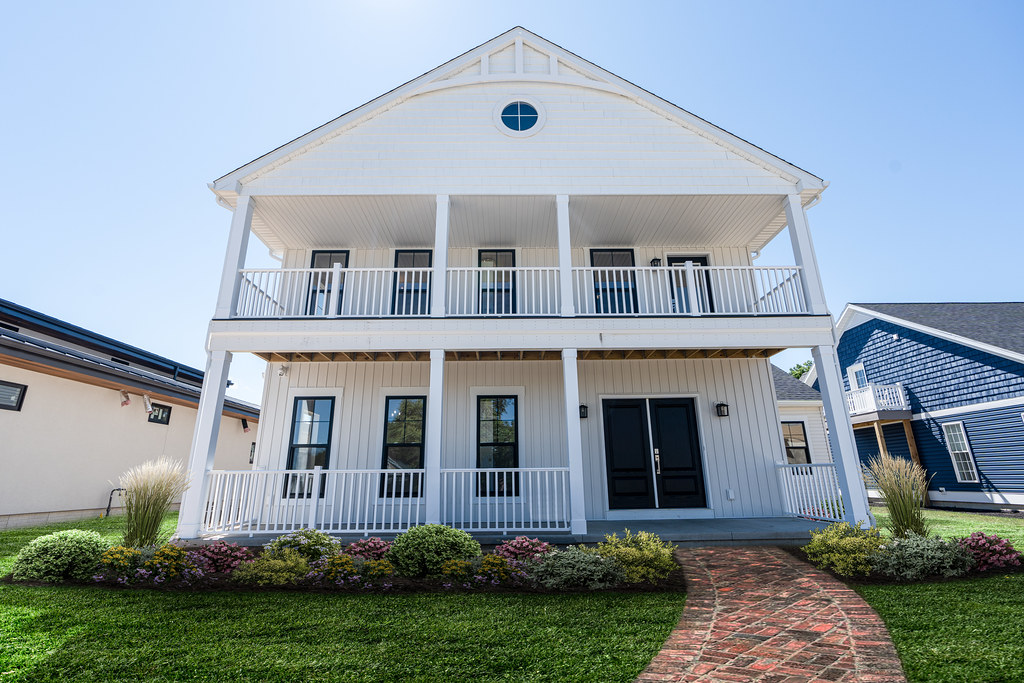
Designing a lake house begins long before choosing a floor plan. The location you select, including its water access, terrain, orientation, community, and site characteristics, plays a major role in how your home will look, feel, and function for years to come. At Wayne Homes, we’ve spent more than 50 years helping homeowners understand what matters most when evaluating lakefront lots across Ohio, Michigan, Pennsylvania, and West Virginia. Our Lake Collection was developed specifically for these environments, combining thoughtful design with practical considerations for building near the water.
Whether you already have a lakefront property or are still exploring options, this guide outlines the most important factors to review when selecting where to build your lake home, along with how Wayne Homes supports you through early site evaluation and plan selection.
Start With the Water: Lake Quality, Depth, and Shoreline Conditions
The appeal of a lake house starts with the lake itself. Before purchasing a property, it’s helpful to understand the water conditions and how they may affect your experience.
Water Clarity and Quality
Lakes vary significantly in water clarity, seasonal conditions, and ecological activity. Local lake associations often track data such as algae cycles, water testing results, and water-level patterns. Reviewing these insights can help set expectations for year-round use.
Depth and Lake Bottom
Depth affects both recreation and long-term access.
- Shallow, sandy areas often work well for swimming, paddling, and wading.
- Deeper areas may be preferred for fishing boats, pontoons, or other motorized watercraft.
A firm lake bottom (sand or small gravel) typically offers easier access compared to soft or marshy areas.
Shoreline Stability and Erosion Patterns
Some shorelines may be subject to seasonal erosion, fluctuating water levels, or vegetation growth. Understanding typical water lines and identifying visible erosion can help you anticipate long-term maintenance needs. Local regulations may also define buffer zones or restrict the construction of docks or retaining structures.
How Wayne Homes Helps
As part of a free homesite evaluation, the Wayne Homes team helps you understand key site characteristics such as visible water marks, general shoreline conditions, and potential access paths. While we do not conduct formal environmental assessments, our experience building near lakes helps homeowners identify early considerations that may affect design or long-term use.
Evaluate the Land: Slope, Soil, Orientation, and Flood Considerations
After reviewing the water itself, the next step is to evaluate the land. A lake lot may offer beautiful views but still present construction challenges. Understanding these factors early helps homeowners make confident decisions.
Slope and Grade
A gentle slope toward the water is often ideal for walkout basements, accessible pathways, and layered outdoor spaces. Steeper grades may require additional planning for retaining walls, drainage, or specialized engineering. The levelness of the area designated for the home also influences foundation design.
Soil Type and Drainage
Soil composition affects how water moves across and through the property.
- Sandy soils typically drain well.
- Clay-based soils retain water and may require drainage considerations.
- Mixed soils may vary in performance across a single lot.
Understanding how soil behaves during wet seasons is particularly important for lakefront locations.
Sun and Orientation
Your preferred type of natural light—morning sun, evening shade, or all-day brightness—can influence how your home is positioned. Orientation also affects energy efficiency, outdoor usability, and long-term maintenance.
Floodplain and Water-Level Data
Flood maps, historical water lines, and elevation data help determine if a property is suitable for building. These factors may also affect insurance requirements and design decisions such as deck placement, foundation height, and outdoor storage areas.
How Wayne Homes Helps
During a homesite evaluation, we review general site characteristics including slope, access points for construction equipment, potential driveway paths, and recommended placement for maximizing lake views. We help homeowners understand how different floor plans may fit the site and what considerations to keep in mind moving forward.
Understand Local Regulations: Setbacks, Permits, HOAs, and Utilities

Lakefront lots often come with additional regulations compared to standard residential parcels. Reviewing these early helps avoid surprises later.
Setbacks and Building Restrictions
Most lake communities—whether township-managed or within a neighborhood association—define how close structures may be built to the water. Regulations may also limit deck sizes, boathouse construction, or any grading near the shoreline.
Permitting Requirements and Community Guidelines
Some areas have architectural requirements for exterior finishes, height restrictions, or guidelines for outbuildings. Short-term rental rules may also be defined at the township or HOA level.
Utility Availability
Lake areas vary widely in utility access. Some may provide full municipal services, while others require:
- Electrical extension evaluations
- Private wells or septic systems
- Propane or alternative heating options
- Planning for winter access and snow removal
Understanding these factors early informs both the design and the budget.
How Wayne Homes Helps
Wayne Homes provides guidance to help you understand which regulations or community standards may apply to your property. Our team can review site-access needs, help identify potential considerations for municipal approvals, and outline how these requirements may influence your design options.
For more details, homeowners often pair this guidance with our resources on choosing a site or preparing for a homesite evaluation.
Location Fit: Community, Access, and Seasonal Use
Beyond the physical characteristics of the lot, it’s helpful to consider how the surrounding area aligns with your daily routine and long-term goals.
Travel Time and Accessibility
Some homeowners want a lake home close enough for frequent weekend visits, while others prefer a quieter, more remote location for extended stays. Travel time affects how the home is used throughout the year.
Community Preferences
Every lake has a distinct personality. Some offer quiet coves, nature preserves, and limited motorized activity. Others are vibrant with marinas, community events, and recreational traffic. Neither approach is better—what matters is what fits your lifestyle.
Access to Essentials
Convenient access to groceries, medical services, and gas stations can improve year-round usability. Even proximity to marinas, boat rentals, or walking trails may influence your choice.
Long-Term Value
Desirable lake communities often maintain strong resale potential. Factors such as stable water levels, well-managed associations, and access to amenities may support long-term value.
How Wayne Homes Helps
While Wayne Homes does not select land for homeowners, we can help you understand what to consider when evaluating potential lakefront sites. Our New Home Consultants offer guidance based on regional experience and can help you compare site characteristics that may affect your design and overall experience.
Design for the Water: Floor Plans That Support Lakeside Living
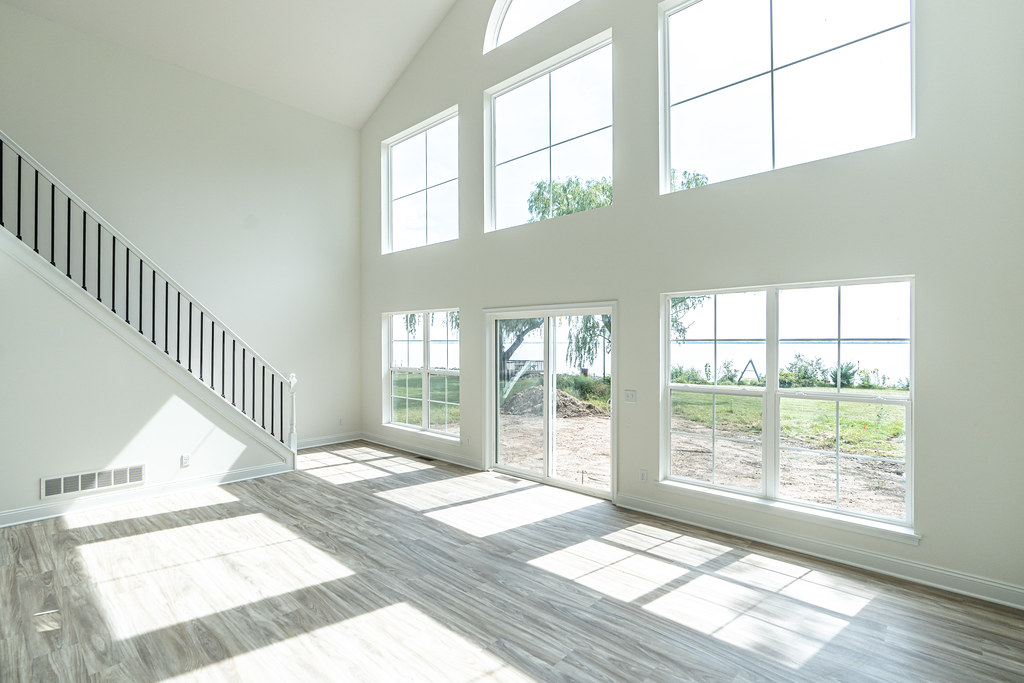
Once you’ve identified a lot, the next step is selecting a floor plan that enhances your connection to the water. Wayne Homes’ Lake Collection plans are designed specifically with lakefront sites in mind.
Key Design Priorities Include:
Expansive Windows and Views
Great rooms, kitchens, dining areas, and owner’s suites often orient toward the water to maximize natural light and visibility.
Purposeful Outdoor Living Areas
Decks, patios, covered porches, and screened rooms extend living space outdoors and make it easy to enjoy the lake in various seasons.
Practical Lake-Lifestyle Features
Homeowners often appreciate:
- Storage for towels, gear, and life jackets
- Durable flooring options
- Sand-friendly entryways
- Close access between indoor gathering spaces and outdoor areas
Thoughtful Zoning for Privacy
Guest bedrooms and entertaining areas are carefully arranged so everyone has space to relax during extended stays.
How Wayne Homes Helps
Lake Collection floor plans are designed for seamless indoor-outdoor flow and can be personalized through structural options and available layout variations within each plan. This helps homeowners choose a design that fits their lot, their routines, and their long-term plans.
“Seeing our ideas reflected in the final layout made the experience rewarding, and the home supports how our family lives.” — Homeowner Review
Why Builder Experience Matters for Lakefront Homes
Building on a lake lot introduces additional considerations—terrain challenges, seasonal conditions, and regulatory requirements—which means experience matters.
Why Homeowners Choose Wayne Homes:
- 50+ years of regional experience
- Specialized guidance for lakeside sites
- Free homesite evaluations
- Clear, structured communication from start to finish
- Multiple National Housing Quality Awards
- Local Field Managers and trade partners familiar with lakefront building conditions
“From our first visit to move-in day, the process felt organized, and communication was clear. We’re very pleased with the result.” — Homeowner Review
How Wayne Homes Supports You
We help you understand site characteristics, review placement options, and choose a plan suited for your property. Our team remains available throughout the process through scheduled updates, on-site meetings, and Builder Signal progress photos delivered seamlessly through the Wayne Homes app.
Regions Homeowners Often Explore
Wayne Homes builds throughout Ohio, western Pennsylvania, southeast Michigan, and the northern and southern panhandles of West Virginia. Homeowners considering lakefront living often explore regions such as:
Lake Erie Shoreline (Ohio)Communities along the shoreline offer marinas, fishing access, and both quiet and active waterfront areas.
Portage Lakes (Ohio)Located near Akron, this inland chain of lakes provides a mix of recreation, coves, and convenient local amenities.
Atwood, Indian, Pleasant Hill, Salt Fork, Seneca, and Buckeye Lakes (Ohio)A collection of well-known inland lakes that offer a range of community styles, recreation options, and year-round usability.
Pymatuning Lake, Lake Arthur, and Conneaut Lake (Western Pennsylvania)Large and mid-sized inland lakes that provide recreation, nature access, and diverse surrounding neighborhoods.
Irish Hills Region and Southeast Michigan Inland LakesThe Devils Lake, Wamplers Lake, Clark Lake, Sand Lake, and Portage Lake areas are well-known options for families seeking a lake home within southeast Michigan.
These examples represent common lake regions that Wayne Homes customers consider when planning a build. The best location depends on your lifestyle, proximity preferences, and long-term goals.
From Lot to Lake House: Your Next Steps
If you’re ready to begin comparing lakefront properties or want guidance on what to look for, Wayne Homes is here to help.
Get Started:
- Download the Lake Collection Guide for plans and inspiration
- Request a Free Homesite Evaluation to better understand your lot
- Visit a Model Home Center to speak with a New Home Consultant
Wayne Homes, helping homeowners design lake houses that feel connected, comfortable, and thoughtfully planned for everyday lakeside living.